
As an Amazon Influencer, we earn from qualifying purchases you might make if you click any of the links or buttons on this page.
How to Prepare for a Hurricane: Complete 2026 Checklist
Prepare before a storm is named: know your evacuation zone, make a family plan, store water and medications, protect the home, and build redundant communication and power.
If a Hurricane Is Already Approaching
If you are reading this because a storm is already threatening your area, prioritize the actions that become dangerous or impossible once tropical-storm-force winds arrive.
1. Know Which Hurricane Hazards Actually Affect You
Hurricane preparation is not only a coastal problem.
The National Hurricane Center identifies five major tropical-cyclone hazards:
- storm surge and storm tide;
- heavy rain and inland flooding;
- high winds;
- rip currents;
- tornadoes.
People living well inland can still experience destructive flooding, tornadoes, falling trees and prolonged power outages.
Find your local evacuation zone
The old version of this guide treated hurricane evacuation areas primarily as storm-surge areas.
That is too simple.
NOAA’s national storm-surge maps are valuable for understanding long-term surge risk, but NOAA explicitly says they are not replacements for official evacuation-zone maps.
Local and state emergency managers create evacuation zones using storm-surge risk plus local roads, bridges, geography, vulnerable populations and other safety considerations.
Before hurricane season:
- Find your local emergency-management agency.
- Check your official evacuation zone.
- Save the route offline or on paper.
- Choose a primary destination.
- Choose a second destination if the first becomes unavailable.
- Plan where pets will go.
You can also review NOAA’s National Storm Surge Risk Maps for broader coastal risk awareness.
2. Know the Difference Between a Hurricane Watch and Warning
| Alert | Meaning | Typical Timing | What You Should Be Doing |
|---|---|---|---|
| Hurricane Watch | Hurricane conditions are possible. | Typically issued about 48 hours before anticipated tropical-storm-force winds. | Finish exterior preparation, charge everything, confirm the evacuation plan and be ready to leave. |
| Hurricane Warning | Hurricane conditions are expected. | Typically issued about 36 hours before anticipated tropical-storm-force winds. | Outside preparation should be ending. Evacuate if ordered or move into your safe sheltering plan. |
| Storm Surge Watch | Life-threatening coastal inundation is possible. | Generally within about 48 hours. | Review evacuation instructions immediately. |
| Storm Surge Warning | Life-threatening coastal inundation is expected. | Generally within about 36 hours. | Follow local evacuation orders promptly. |
Swipe to compare →
3. Make the Evacuation Plan Before You Need It
The evacuation plan should answer five questions before a warning is issued:
If authorities order an evacuation, leave.
A well-built house is not a reason to stay in a location threatened by life-threatening storm surge or flooding.
4. Build a Go Kit — But Don’t Stop at “Three Days”
A three-day supply is a useful minimum emergency baseline, not a promise that infrastructure will be normal on day four.
Hurricane outages, road closures and water problems can continue substantially longer.
Evacuation / Go-Kit Checklist
- photo identification;
- insurance information;
- important medical information;
- prescription medicines;
- list of medications, doses and allergies;
- phone and charging cables;
- charged power bank;
- flashlight or headlamp;
- NOAA-capable portable radio;
- food that does not require refrigeration or cooking;
- water;
- first-aid supplies;
- hygiene items;
- weather-appropriate clothing;
- sturdy shoes;
- cash in small denominations;
- copies of important documents in waterproof storage;
- pet food, medications, leash/carrier and records;
- written family communication plan.
Do not make the pack so heavy that the person assigned to carry it cannot move it safely.
5. Store Water Before the Storm
CDC guidance recommends storing at least one gallon of water per person per day for at least three days.
That water covers drinking, cooking and basic hygiene.
In hot conditions, with illness, pregnancy, nursing, pets or longer expected outages, your needs may be higher.
=
3 GALLONS MINIMUM BASELINE
Commercially bottled water is the simplest emergency drinking supply.
If you fill reusable containers, make sure they are clean and suitable for water storage.
After the storm, follow local boil-water or do-not-use advisories. Water contaminated with fuel or toxic chemicals cannot simply be made safe by boiling it.
6. Plan for Prescription Medicines and Medical Needs
Pharmacies, clinics and roads can all become unavailable after a hurricane.
Before hurricane season:
- talk to your doctor or pharmacist about an appropriate emergency supply of medications;
- keep a current written list of prescriptions, doses and allergies;
- plan how medicines requiring refrigeration will stay cold;
- know where you would receive treatment if your normal provider closes;
- include spare batteries or backup power for essential medical equipment.
If you evacuate, take your prescription medicines with you rather than assuming they will be easy to replace at the destination.
7. Prepare the Home Before a Watch Is Issued
Some hurricane work belongs in the off-season, not the afternoon before landfall.
Bring loose objects inside
Patio furniture, garbage cans, grills, bicycles, planters, tools and building material can become dangerous debris in hurricane winds.
Secure them or move them indoors while conditions are still safe.
8. Do Not Automatically Turn Off Every Utility
The previous version of this article told readers to turn off gas and electricity to the entire house.
That should not be a blanket instruction.
Current hurricane guidance is conditional.
Be ready to shut off electricity if flooding, damaged wiring, evacuation instructions or local authorities make it necessary.
If evacuating and you have sufficient time, officials may advise disconnecting appliances and shutting off utilities.
Follow instructions from your utility and local emergency-management agency.
9. Get the Vehicle Ready
- Fill the fuel tank before stations become crowded or lose power.
- Check tires, fluids and the spare.
- Keep a small emergency kit in the vehicle.
- Load charging cables and a vehicle USB adapter.
- Save the evacuation route offline.
- Move the vehicle away from areas likely to flood if local guidance allows.
- Know how pets and carriers will fit before the evacuation starts.
10. Build More Than One Way to Receive Warnings
Your warning system should not depend on a single phone battery, cellular tower or internet connection.
A stronger setup combines:
- Wireless Emergency Alerts on phones;
- local emergency-management alerts;
- NOAA Weather Radio;
- local radio or television where available.
For a permanent home receiver, a S.A.M.E.-capable NOAA radio can be programmed for the locations you care about and remain listening while you sleep.
Our Best Emergency Radios 2026 guide explains the difference between a home alert receiver, portable outage radio and crank radio.
11. Plan How Your Family Will Communicate if Cellular Service Fails
A weather radio tells you what is happening.
It does not automatically give separated family members a way to talk to one another.
Before the storm, decide:
- who everyone should contact outside the disaster area;
- where you will meet if separated;
- which communication method is primary;
- what the backup is;
- when family members should attempt check-ins.
12. Charge Everything Before Conditions Deteriorate
Before the storm arrives:
- charge every phone;
- charge USB power banks;
- charge radio battery packs;
- charge any larger portable power station;
- install fresh backup batteries;
- test charging cables;
- keep vehicle charging available;
- download maps and important documents for offline access.
Do this while grid power is stable.
13. Generator Safety Is Part of Hurricane Preparation
Portable generators can keep refrigeration, lights and essential devices working through a long outage.
They also create carbon monoxide, an odorless and colorless gas that can kill without warning.
Also:
- use a working battery-powered or battery-backup carbon monoxide detector;
- keep the generator dry and follow the manufacturer’s operating instructions;
- never connect a generator directly to household wiring unless an appropriate professionally installed transfer system is used;
- do not use charcoal grills, gas grills or camp stoves indoors.
14. What to Do if You Stay Home During the Storm
Stay home only when local officials have not ordered evacuation and the building/location is appropriate for sheltering.
During the storm:
- stay indoors;
- stay away from windows and glass doors;
- move to a protected interior area if needed;
- keep shoes, flashlight and phone with you;
- continue monitoring official alerts;
- do not go outside during a temporary lull;
- be prepared to move if local officials change their instructions.
15. Hurricane Food Safety During a Power Outage
Keep refrigerator and freezer doors closed as much as possible.
| Appliance | Approximate Safe Time if Kept Closed | After That |
|---|---|---|
| Refrigerator | Up to 4 hours | Perishable refrigerated foods generally need to be discarded unless kept at a safe temperature another way. |
| Full freezer | About 48 hours | Check temperature/ice crystals before keeping or refreezing food. |
| Half-full freezer | About 24 hours | Check each item individually. |
Swipe to compare →
Never taste questionable food to decide whether it is safe.
Discard food that has contacted floodwater.
16. The Storm Is Over — The Danger Is Not
A large portion of hurricane risk occurs after the wind has stopped.
Wait for official guidance before returning to an evacuated area.
Watch for:
- flooded roads;
- downed power lines;
- unstable buildings;
- damaged trees;
- carbon-monoxide exposure;
- contaminated water;
- spoiled food;
- mold;
- sharp debris;
- animals displaced by flooding.
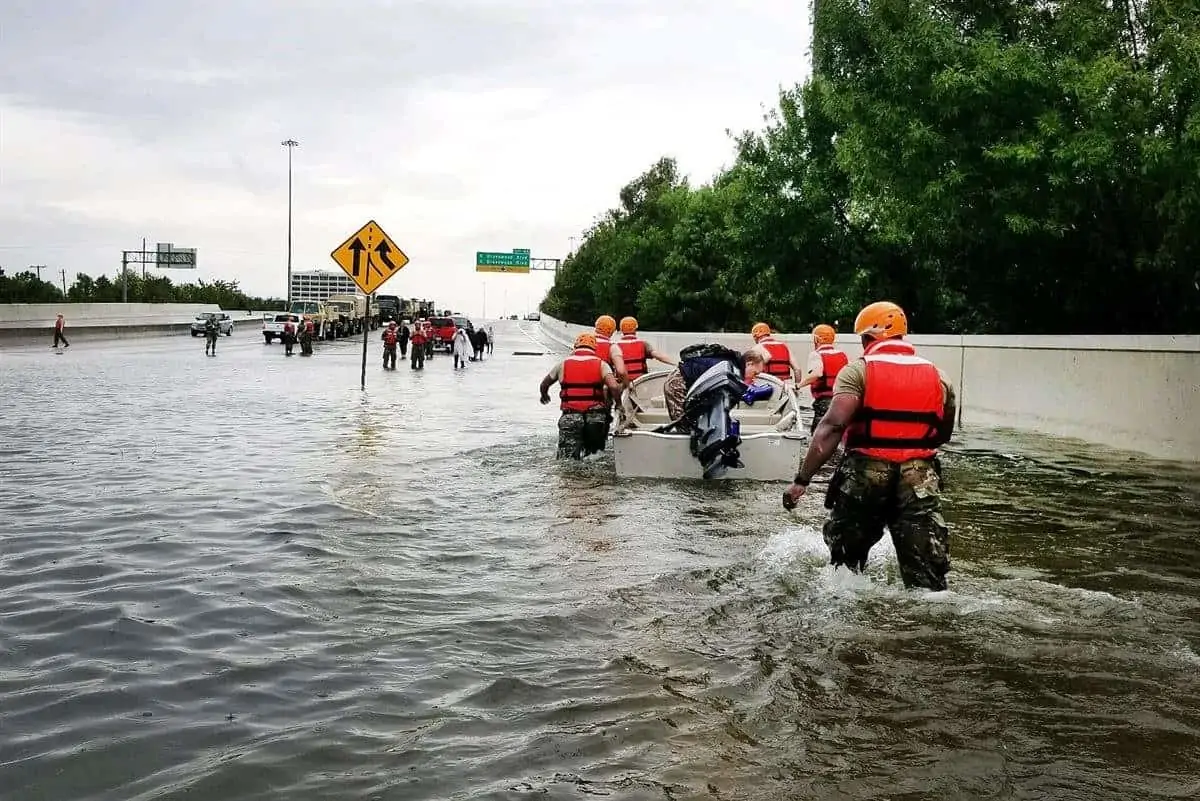
Stay out of floodwater
Floodwater can contain sewage, chemicals, debris, animals and electrical hazards.
Do not walk, swim or drive through it simply because the storm has passed.
Do not reenter a seriously damaged structure
If a home shows significant structural, electrical or flood damage, wait until it has been evaluated and officials say it is safe to enter.
17. Review Insurance Before Hurricane Season
Do this months before a storm is approaching—not when a hurricane watch appears.
Review:
- homeowners or renters coverage;
- wind/hurricane deductibles where applicable;
- flood coverage;
- vehicle coverage;
- temporary-living-expense provisions;
- current home inventory and photographs.
See FloodSmart.gov for current National Flood Insurance Program information.
18. Store Important Documents So One Flooded Drawer Doesn’t Destroy Them
Keep waterproof physical copies or secure digital backups of:
- identification;
- insurance policies;
- medical information;
- prescription information;
- property records;
- emergency contacts;
- pet vaccination/veterinary records;
- vehicle information;
- bank and financial contact information.
A password-protected digital copy gives you another path if the physical folder is lost.
A Practical Hurricane Preparation Timeline
Complete Hurricane Preparedness Checklist
- ☐ Know your official evacuation zone
- ☐ Know primary and backup evacuation destinations
- ☐ Save routes offline and on paper
- ☐ Plan for pets
- ☐ Plan for medical/disability needs
- ☐ Store at least the baseline emergency water supply
- ☐ Store nonperishable food
- ☐ Review prescriptions and emergency medicine needs
- ☐ Assemble evacuation bags
- ☐ Keep IDs and documents protected
- ☐ Review insurance and flood coverage
- ☐ Photograph property for your inventory
- ☐ Repair roof/window/garage vulnerabilities
- ☐ Prepare shutters or plywood before storm season
- ☐ Clear gutters and drains
- ☐ Know what outdoor objects must come inside
- ☐ Fill the vehicle before the storm
- ☐ Enable Wireless Emergency Alerts
- ☐ Program and test NOAA Weather Radio
- ☐ Establish family communication/check-in plan
- ☐ Charge phones, radios and power banks
- ☐ Test every charging cable
- ☐ Keep flashlights and spare batteries accessible
- ☐ Test CO detectors
- ☐ Review generator safety before using one
- ☐ Know refrigerator/freezer outage rules
- ☐ Follow evacuation and reentry orders
Related Wholly Outdoor Guides
Hurricane Preparedness FAQ
When should I start preparing for a hurricane?
Prepare the parts that take planning—evacuation zones, insurance, structural work, emergency supplies, medical needs and communication plans—before hurricane season. Once a watch is issued, you should be finishing preparations rather than beginning them.
How much water should I store for a hurricane?
CDC guidance uses at least one gallon per person per day for at least three days as the baseline emergency water supply. Store more when practical, especially for hot weather, longer outages, medical needs and pets.
How much food should I keep?
Maintain several days of food that can be stored safely without refrigeration and ideally requires little cooking. Consider special dietary and medical needs as well as infants and pets.
Should I evacuate for every hurricane?
Follow your local emergency-management agency. Evacuation decisions depend on your location, storm-surge and flood risk, building type, forecast and local conditions. If officials issue an evacuation order for your area, leave promptly.
Is a storm-surge map the same as my evacuation-zone map?
No. NOAA’s storm-surge risk maps help explain the long-term hazard, but local evacuation zones may incorporate roads, bridges, geography and other emergency-management considerations. Use your local official evacuation map for evacuation planning.
What should I do when a hurricane watch is issued?
Complete exterior preparations, fill the vehicle, charge electronics and backup batteries, secure outdoor objects, confirm the evacuation route and prepare to leave if officials order an evacuation.
What should I do when a hurricane warning is issued?
Hurricane conditions are expected. Outside preparation should be ending because tropical-storm-force winds may arrive before the strongest part of the hurricane. Evacuate immediately if ordered; otherwise move into your sheltering plan.
Should I turn off my home’s power and gas before a hurricane?
Not automatically. Follow your utility and local emergency officials. Turning off power may be appropriate when evacuating, when flooding threatens electrical systems or when authorities instruct you to do so. Never enter water or an unsafe location to reach electrical equipment.
How far should a generator be from the house?
CDC guidance says portable generators should operate outside and at least 20 feet away from windows, doors and vents. Never run one inside a home, basement, garage or carport.
How long is refrigerator food safe when the power goes out?
With the door kept closed, CDC says refrigerated food generally stays safe for up to four hours. A full freezer can hold a safe temperature for roughly 48 hours and a half-full freezer for about 24 hours.
What communication equipment should I have for a hurricane?
Use more than one warning source, including phone emergency alerts and NOAA Weather Radio. If your household could become separated, add a local communication plan and radios where appropriate, plus backup power for phones and communications equipment.
Official Hurricane Preparedness Resources
- National Hurricane Center — official tropical cyclone forecasts, watches, warnings and storm-surge information.
- National Hurricane Center: Hurricane Hazards — storm surge, flooding, high wind, rip currents and tornado information.
- NOAA National Storm Surge Risk Maps — long-term storm-surge risk awareness.
- Ready.gov Hurricane Preparedness — federal evacuation and emergency-supply guidance.
- CDC Hurricane Preparation and Safety — current health and safety guidance before, during and after tropical storms.
- CDC Emergency Water Supply — storage quantities and safe-water preparation.
- CDC Carbon Monoxide Safety — generator placement and CO prevention.
- CDC Food Safety After an Emergency — refrigerator/freezer outage guidance.
- National Flood Insurance Program — flood insurance and coverage information.
Safety note: Hurricane conditions, evacuation procedures, building requirements and utility instructions vary by location. Follow current orders from your local emergency-management agency, utility providers, National Weather Service and National Hurricane Center. If official instructions conflict with a general preparedness article, follow the official instructions for your area.