
Best POTA Ham Radio Setup (2026): Radio, Antenna, Battery & Coax
As an Amazon Influencer, we earn from qualifying purchases you might make if you click any of the links or buttons on this page.
The best POTA ham radio setup in 2026 depends on two things: how far you carry it and whether the park gives you a safe place to hang a wire. For most short walks from the car, start with a Yaesu FT-891, a high-discharge 15 Ah LiFePO4 battery, and a Chameleon LEFS 8010 wire. Swap in a self-supporting vertical at treeless sites. If the whole station goes into a backpack for miles, build around the Elecraft KX2 instead.
Last reviewed: September 24, 2026. Equipment lists below describe compatible station plans; they are separate purchases unless a kit explicitly includes an item.
Quick Picks: Three Complete POTA Paths
FT-891 + LEFS 8010
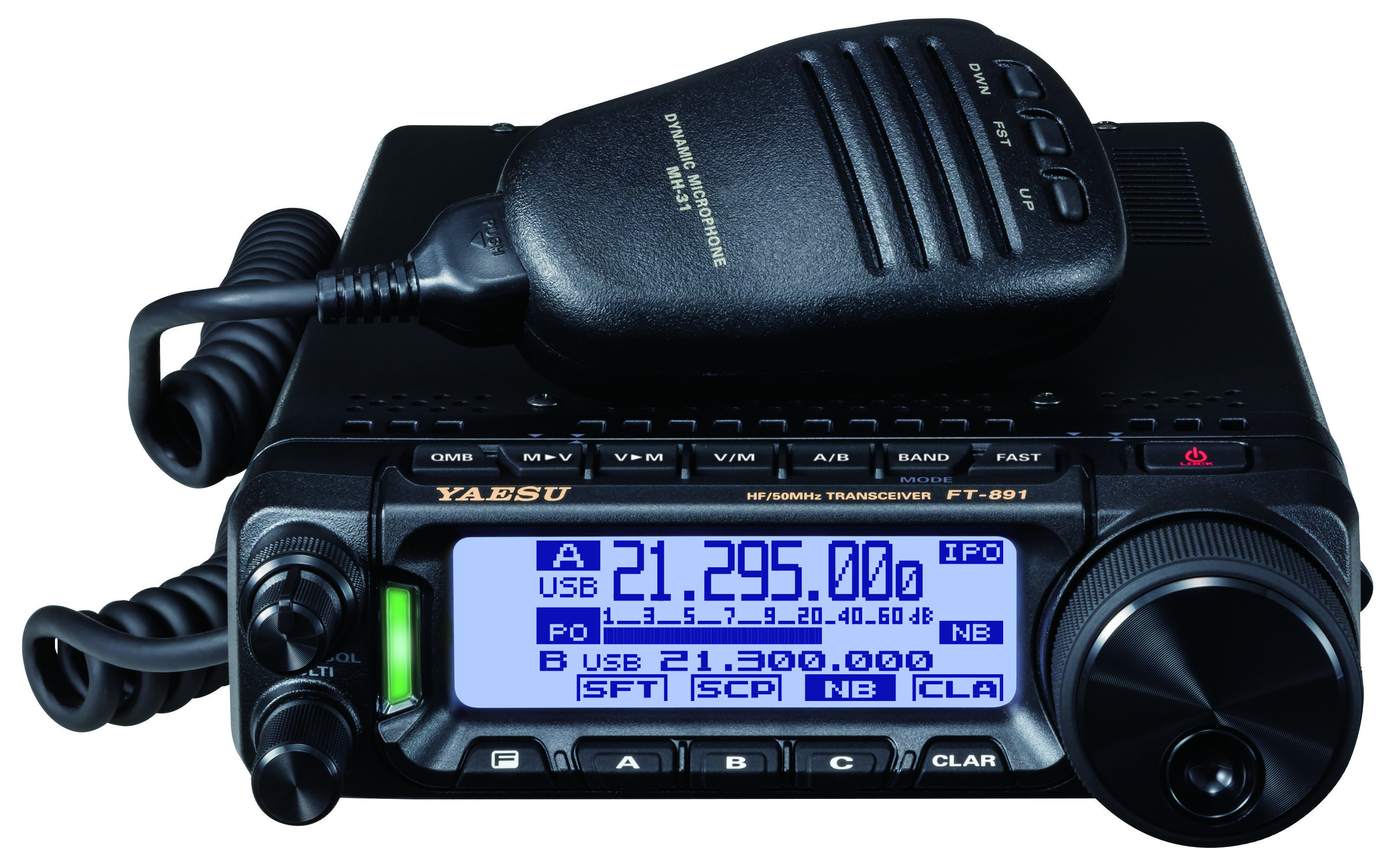
100 W HF/6 m, Bioenno BLF-1215AS battery, 63 ft wire, 50 ft choked RG-58 and a permitted support. The best balance when your table is near the car.
Limit: the radio and battery alone weigh about 8.5 lb.
FT-891 + HF-010 vertical
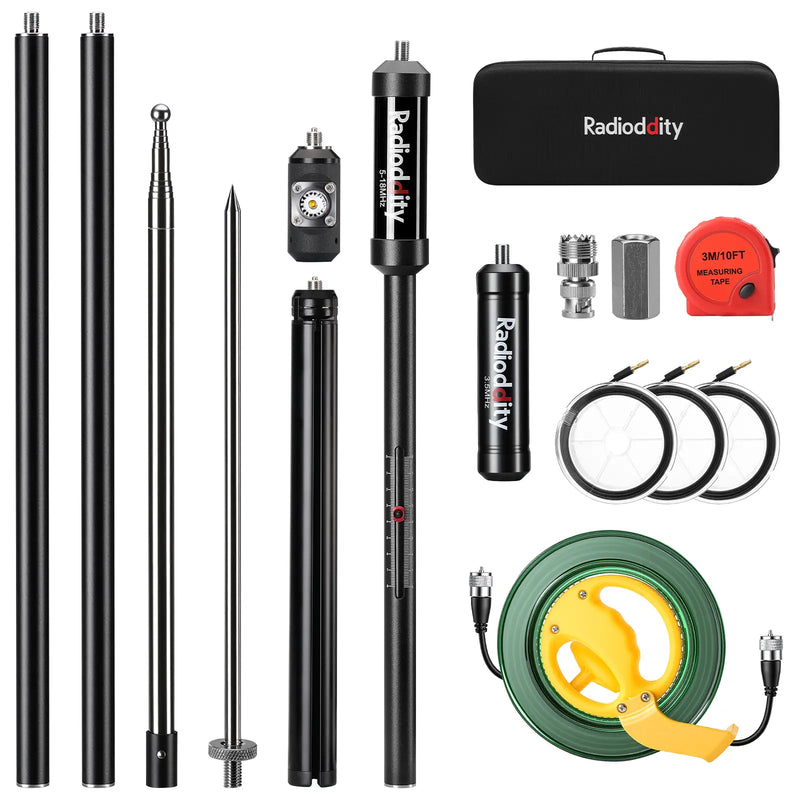
Keep the same radio and battery. Use the Radioddity HF-010 tripod kit, its included radials and its included coax when a wire is impractical.
Limit: loaded verticals need careful band-by-band adjustment and secure ballast.
KX2 + LEFS FEATHER
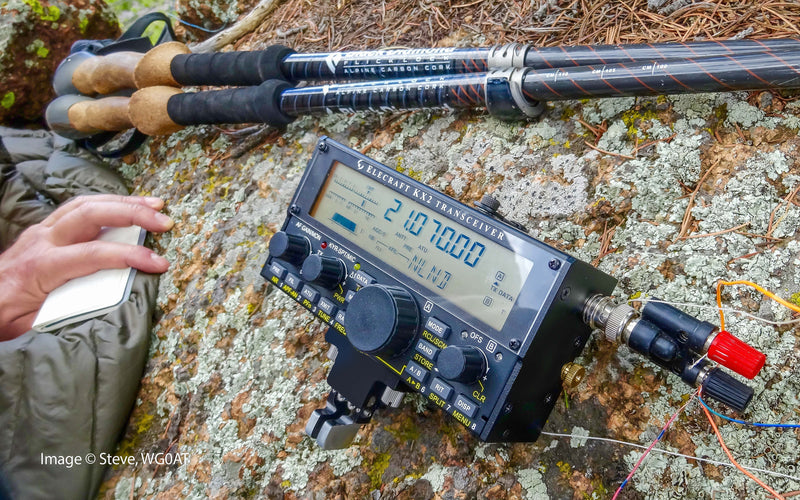
10 W KX2, optional KXBT2 internal battery, 3.4 oz FEATHER wire, 25 ft choked RG-316 and a light throw kit.
Limit: low-power SSB takes more patience and still needs a wire support.
Compare the Whole Stations
| Setup | Radio and field power | Antenna and feed line | Support | Best use |
|---|---|---|---|---|
| Short carry | FT-891, up to 100 W; separate BLF-1215AS 15 Ah battery | LEFS 8010; 50 ft RG-58 with integrated choke | Permitted tree or suitable mast; throw line and weight | Near-car SSB with room for a 63 ft wire |
| Treeless | Same FT-891 and BLF-1215AS | HF-010 loaded vertical; use its included ~33 ft choked coax | Included tripod and water-bag ballast | Pavement, sparse trees, tight wire footprint |
| Hike-in | KX2, up to 10 W; optional KXBT2 internal battery | LEFS FEATHER; 25 ft RG-316 with integrated choke | Permitted branch or suitable lightweight support | Several-mile carry where every ounce matters |
Already own a suitable HF radio? Use it first. Spend on a workable antenna, a battery with the right current rating, and a dry run at home before replacing the transceiver. For radio-only comparisons and the SOTA differences, see our portable POTA and SOTA guide.
1. Best Short-Carry POTA Setup: FT-891 + LEFS 8010
Pack: Yaesu FT-891 and its power lead and microphone; Bioenno BLF-1215AS with the matching connector adapter and a proper LiFePO4 charger at home; Chameleon CHA LEFS 8010; Chameleon 50 ft RG-58 cable with integrated choke and PL-259 plugs; a legal tree or suitable mast; throw line, throw weight, support cord, and an RF-aware logging device or paper log. Add headphones, weather protection, a small SWR meter if desired, and a safe way to protect the DC lead from shorts.
The FT-891 delivers up to 100 W on amateur HF and 6 m and weighs about 4.18 lb. Its published transmit draw reaches 23 A. That is why the 15 Ah figure on the battery is only half the story: the BLF-1215AS is rated for 30 A continuous discharge and weighs about 4.3 lb. Bioenno calls this AS model an upgrade to the earlier BLF-1215A in the accompanying video script. Check the radio’s specified supply-voltage range and the voltage at the radio under load; use a correctly sized, fused DC lead and the supplied adapters where applicable.
That pairing clears the published current requirement, but 15 Ah is not a guaranteed activation length. A simple planning example using Yaesu’s 2 A receive and 23 A maximum transmit figures gives an average of 4.1 A at 10% transmit time, or roughly 3.7 theoretical hours from 15 Ah. SSB speech is not a continuous 23 A draw, while CW, digital, long calls, temperature, voltage sag and battery cutoff can shorten or change the result. Leave a reserve; test your actual operating pattern at home. Bioenno specifies a 14.6 V, 4 A compatible charger, sold as a package option or separately.
The FT-891 has no built-in tuner. Chameleon’s LEFS 8010 gives you a roughly 63 ft primary wire and a 67 ft extension for a roughly 130 ft 80 m configuration. Chameleon lists 80, 40, 30, 20, 17, 15, 12 and 10 m for the complete system, with ratings of 500 W SSB, 250 W CW and 150 W digital. Start with its specified geometry and check SWR on the actual frequency before transmitting. The manufacturer lists approximately 3:1 on 80 m; do not promise that every band and installation will be tuner-free. Carry a suitable tuner if your actual band and installed match require one. A tuner fixes the impedance seen by the radio, not the efficiency of a poorly placed wire.
For this elevated deployment, a 50 ft Chameleon RG-58 with integrated RFI choke connects PL-259 to the FT-891 and the antenna’s SO-239. Chameleon quotes about 2.5 dB loss per 100 ft at 30 MHz; half that length is about 1.25 dB at that frequency, before connector or mismatch effects. It is a practical weight and reach compromise for HF, not an excuse to route more cable than needed. An integrated choke helps with common-mode current, but the antenna must still be installed as directed.
Where it wins: the 100 W radio and relatively long wire make a comfortable short-carry SSB station when you can get the antenna safely clear of people. Where it loses: the radio and battery already weigh about 8.5 lb, and a 63 ft wire needs legal space and height. For our closer look at the transceiver, see the FT-891 comparison.
Other components: Bioenno BLF-1215AS · LEFS 8010 · 50 ft RG-58. Confirm the correct 50 ft coax variant and your park’s tree policy before checkout.
2. Best Treeless POTA Setup: Keep the FT-891, Change the Antenna

Pack: the same FT-891, BLF-1215AS battery and power kit; Radioddity HF-010 antenna, supplied tripod, three supplied radials, supplied roughly 33 ft coax, and its 3 L water bag. Bring water or another permitted ballast method if the site has no tap. Leave the 50 ft LEFS coax and throw kit at home.
Radioddity’s HF-010 covers 80–6 m with a shortened, adjustable vertical. The published limits are 150 W PEP SSB and 100 W CW, so ordinary FT-891 SSB power fits the stated SSB rating. The kit weighs about 6.6 lb with accessories. Its three radials are each 15.7 ft; the included 32.8 ft coax has a fixed five-turn choke in the video script. Use the kit’s setup diagram for each band, adjust carefully at low power, check SWR, and keep the radiator and radials out of walking paths. On 80 m, the supplied instructions call for a different configuration without those radials.
The tripod and fillable bag are useful on pavement, but ballast is essential in wind. No water at the site means you must carry it or plan an acceptable alternative. This antenna solves a support problem; it does not make a short loaded vertical as efficient as a well-installed longer wire. Be especially cautious about low-band expectations. Radioddity gives an SSB and CW rating but does not publish a separate continuous-duty digital rating on the product page. Do not infer 100 W FT8 operation from its SSB limit.
If full-power digital operation is central to your plan, choose an antenna whose current, exact-model documentation states the needed continuous-duty limit. Power ratings vary sharply between antennas and even between similarly named coil models.
Best for: legal vehicle-side spots, hard surfaces and parks that prohibit or lack tree supports. You and all equipment must remain on public property inside the official POTA park boundary, including a legally parked vehicle.
3. Best Hike-In POTA Setup: KX2 + LEFS FEATHER

Pack: Elecraft KX2, optional KXBT2 2.6 Ah Li-ion battery, the correct KXBT2 charger or optional internal charger, Chameleon LEFS FEATHER wire, 25 ft Chameleon RG-316 with a built-in choke and male BNC ends, a small legal throw kit or support, and a paper log or small device. Add a compatible BNC path only if your exact antenna connection requires it; check the LEFS FEATHER’s BNC feed and the KX2 connectors before leaving home.
The KX2 weighs 13 oz before options and puts out up to 10 W across its HF bands. The KXBT2 battery is sold separately, weighs about 4.8 oz and can support up to 10 W according to Elecraft. Add the FEATHER’s 3.4 oz and those three items total about 21.2 oz, or 1.33 lb, before cable, support, microphone, logging and weather gear. Elecraft quotes 4–8 hours of typical battery operation depending on transmit power; do not turn that range into a promise for your duty cycle. Its KXBC2 external charger charges the removed battery; the optional KXIBC2 enables charging while installed.
The LEFS FEATHER is a roughly 61.5 ft sloper. Its documented no-tuner bands are 40, 20, 15 and 10 m. Chameleon rates it for 25 W SSB and only 10 W CW or digital. If using the KX2 on CW or digital, operate below that published ceiling to allow margin. Bands such as 30, 17 and 12 m require a tuner according to Chameleon’s guide; the optional KXAT2 is worth buying when your chosen bands or other field wires actually need it. It does not remove the need for a safe raised support.
The 25 ft RG-316 choke cable has male BNC ends. Chameleon quotes 4.3 dB per 100 ft at 30 MHz, which gives roughly 1.08 dB for 25 ft at that frequency. The lighter coax works here because the run is short; doubling its length also doubles the quoted dB loss. At 10 W, a QRP station begins 10 dB below a 100 W station before antenna, propagation and feed-line differences. The payoff is carry weight, not stronger SSB signals.
Best for: a real hike with a legal wire support at the destination. Skip it if: your picnic table is close to the car and easy SSB contacts matter more than shaving pounds. The KX2 is a specialist HF choice; it does not add 2 m or 70 cm.
For the exact factory configuration and separate options, see Elecraft’s KX2 order page. For the antenna and lightweight coax, see the FEATHER and RG-316 pages.
What About the Yaesu FTX-1 Optima?
The FTX-1 Optima is a premium alternative if you want one platform with a detachable field head and a 100 W SPA-1 amplifier unit. Yaesu includes a field battery and rates the detached head at 6 W on that pack or 10 W with external 13.8 V power. The amplifier needs its own suitable 100 W station power plan. The Optima does not make a better default purchase if you only need the short-carry HF station above; its appeal is the separate low-power field mode and broader HF/VHF/UHF coverage. Match any antenna and its power rating to the head or amplified configuration you actually take into the park.
What to Pack Beyond the Big Four
- Power and RF connections: the radio’s power cable, matching battery adapter, suitable fuse, coax of the chosen system, and only the adapters your actual connectors require. Do a full dry run with your own hardware.
- Antenna support: a throw line and safe throw weight only where tree use is allowed; otherwise an appropriate mast or the vertical’s tripod. Avoid power lines, occupied trails and branches that you cannot safely reach.
- Operating: microphone or key, headphones, frequency and band plan, callsign/park reference, UTC clock, paper or offline log, pencil, weather cover, and a charged phone or spare power for logging.
- Optional: an antenna analyzer for troubleshooting, a tuner when the measured installation calls for one, and a digital audio interface if using modes such as FT8 with the FT-891. Its USB connection is for control, not built-in USB audio.
A Simple First Activation
- Choose a park on the POTA map; check the managing agency’s official boundary, public access, rules on trees or stakes, and operating hours.
- At home, connect the whole station and verify battery voltage under transmit load, SWR on each intended band, microphone or key, logging time in UTC, and that the pack really contains every adapter.
- At the park, keep yourself and every part of the station inside the official boundary on public property. Secure the antenna away from people and traffic; start at low power and recheck the match.
- Pick a clear frequency you are licensed to use, call CQ POTA, and self-spot if helpful. POTA does not require a special exchange.
- Record callsign, band, mode and UTC date/time for every QSO. Ten valid contacts within one UTC day make a successful activation; submit an ADIF log even if you make fewer so hunters receive credit. Land-repeater contacts do not count.
Watch the POTA Setup Walkthrough
The companion video walks through the short-carry, treeless and hike-in choices and shows why each changes the antenna or power system.
Watch the video directly on YouTube if the player does not load.
Which Setup Should You Build?
Short walk, good support
FT-891, BLF-1215AS, LEFS 8010 and 50 ft choked RG-58. Start on a documented wire band and measure the real match.
Treeless or paved site
Keep the FT-891 and battery. Take the HF-010 kit with its own coax, band-specific radial instructions and sufficient ballast.
Several miles on foot
Use the KX2 with KXBT2, LEFS FEATHER and 25 ft choked RG-316. Carry a safe support and accept the low-power tradeoff.
Related Ham Radio Guides
POTA Setup FAQ
What is the best beginner POTA setup?
When the station only travels a short way from your vehicle and the park allows an elevated wire, an FT-891 with a properly rated 15 Ah LiFePO4 battery and LEFS 8010 is a flexible 100 W HF station. Use a radio you already own if it is suitable. In a treeless park, change the antenna rather than replacing the whole station.
How many contacts do I need for POTA?
Ten valid QSOs from a listed park in one UTC day make a successful POTA activation. Upload your ADIF log even if you made fewer contacts; land-repeater QSOs do not count.
Can I activate POTA from my car?
Yes, if you are legally on public property inside the official park boundary and your entire station is also inside the boundary. Follow the park’s own access and equipment rules.
Is a 15 Ah battery enough for a 100 W FT-891?
Capacity alone does not answer that. The BLF-1215AS’s 30 A continuous rating exceeds Yaesu’s 23 A maximum transmit-current figure. Runtime depends on transmit duty, mode, voltage, temperature and cutoff, so measure your own station with a reserve.
Does the FT-891 need an antenna tuner?
It has no internal tuner. You may be able to use a properly deployed, measured antenna on its documented bands without an external tuner. Some bands and configurations, especially the LEFS 8010’s 80 m setup, can need matching. Verify SWR on site before deciding.
Can I use the HF-010 for 100 W FT8?
Do not assume so. Radioddity states 150 W PEP SSB and 100 W CW but does not publish a separate digital-duty rating for this antenna. Ask the maker for the specific duty limit or choose a system with a documented digital rating.
Does the KX2 include a battery and tuner?
The KXBT2 battery, KXAT2 tuner and charging options are separate Elecraft choices; check the exact package. The FEATHER’s documented 40, 20, 15 and 10 m setup can make a tuner unnecessary for those bands if the installed match is suitable.
Specifications and Rules Checked
- POTA official rules: boundaries, vehicle operation, 10 QSOs per UTC day, eligible contacts and ADIF logs.
- Yaesu FT-891 specifications and Bioenno BLF-1215AS.
- Chameleon LEFS 8010, RG-58 coax, LEFS FEATHER, and RG-316 coax.
- Radioddity HF-010 specifications and Elecraft KX2 specifications and options.